Stem Cell and iPS (induced Pluripotent Stem Cells) Injections for Alzheimer's Disease (AD)
Recently I called a friend who is a surgeon in Florida to tell him about my research to inject stem cells into the Meibomian Glands. I was awaiting a caution over-the-phone frown and concern, given stem cell injections into the Meibomian Glands has never been attempted and is groundbreaking.
Instead, he said, "I have injected stem cells intrathecally (in the spinal cord area) on four Alzheimer's patients and a patient with ALS." I was shocked. I asked the details on these patients. He and a fellow surgeon have measured cognitive function under a detailed protocol before and after stem cell injection. All patients have improved significantly according to these tests and family members but there are no controls in their study (they did not do a "sham" (or pretend) injection). There have been no complications. It has not been published. He plans to continue to do these injections.
I can understand. Alzheimer's is a devastating condition which is painful to watch: to watch the deterioration of your loved ones with no treatment available to give them. If my mom or dad had Alzheimer's I would be in line to signup to try stem cell injections as well, even if there is a small chance it would help. The fact is that Stem Cell Injections for numerous disease are showing promise in many cases, but there is no randomized, controlled study to prove it works across the board. We are in the next frontier in Medicine and Surgery. And with many of these diseases, such as ALS and Alzheimer's, there is a race against time (I would include Meibomian Gland Disease in this race against time disease category): once the neurons (or glands) are dead it can be very difficult to bring them back to life. Getting to these patients earlier may prove to be more successful than injecting into areas with totally dead neurons (or glands). But we do not know yet.
This led me to do more research on Stem Cell Injections for Alzheimer's patients. I have many friends and patients who have Alzheimer's and it is a devastating illness. We even just now started a protocol in our office to record our conversations, if the patient approves, to be able to have the patient replay the office visit so the patient and his or her family can remind the patient of what I said and how medicines should be used.
Many doctors these days have at least one patient who comes in multiple times per week forgetting they had already come in for their visit. They call multiple times with the same questions and sometimes get very upset that "nobody told me..." even though multiple staff members have told them the same thing over and over. We cannot discharge these patients from our practice as hard as it is for our staff, even though that would be easier. I often tell our staff: this could be us in 50 years. I often joke with my wonderful executive assistant Kat who is about to go to medical school, "will you still love me when I am like Mrs. H," referring to our well-known patient who has Alzheimer's and lives alone with almost no family to help.
The key cause of Alzheimer's Disease is an abnormality of the amyloid cascade: there is an abnormally large deposition of amyloid protein deposited in the brain and other parts of the body. But certain cases of AD patients without Aβ deposition suggest the possibility of a AD mechanism not related to Aβ such as the suspected non-amyloid (or Alzheimer's disease) pathophysiology.
Here are the best papers I could find on Stem Cell Injections for Alzheimers. It is very controversial. It is not covered by any insurance and it can cost between $6000-10000 per treatment.
The conclusion of these papers:
0. There is reason for great excitement in stem cell replacement therapy for AD but there still several challenges.
1. Donor-to-donor variation and the importance of considering genetic and epigenetic backgrounds of donor cells: that means your cell's proteins and my cell's proteins are different and they may not interact as we expect
2. If you do not have AD and I do, and your cells have genetic defects that are known to cause AD, we have to correct those defects before you give them to me.
3. The known genetic defects that cause biochemical symptoms of AD:
a.APP,
b. PS1,
c. PS2 in SAD
4. CRISPR is a new DNA-editing technology which is like molecular scissors that help cut out defects in DNA and paste in the right code.
5. Stem cell transplant might increase your risk of developing a new cancer. The reason for this is: Epigenetic memory of donor cells was shown to affect gene expression and cellular stability following transplantation and reprogramming, posing unexpected risks for tumorigenesis. Those extra proteins on the donor cells that make your cells different from mine, might cause mutations in DNA and lead to tumors and cancers. This is a BIG problem. For Alzheimer's patients, it might be ok though as the tumors that develop might not kill them if they are already old and only have years as opposed to decades to live.
6. We need purity of donor cells: trying to be sure all the cells are about the same. By reducing heterogeneity, it will improve functional integrity in the iPSC products. For this purpose, genome-wide reference maps on epigenetic prints such as DNA methylation are under development.
7. Where should stem cells be injected? For the meibomian glands, it is easy: I will inject them in the meibomian gland. But in Alzheimer's where there is widespread neurodegeneration all over the brain, where is the best place to inject them. Most surgeons are injecting into the spinal cord through a spinal tap (needle in your back between the bones leads to the spinal cord). But maybe it is better to inject the stem cells directly into the hippocampus and lateral ventricles which are known to contain neural stem cells. Maybe injecting them directly into the best location will prevent rejection or complications.
8. There is the possibility of transplantation rejection tumor development: A solution might be to reprogram the cell in vivo (in the body) or in situ (in the petri dish or outside the body location).
9. Stem Cell technology is helping to build better models of what AD exactly does to the brain.
10. Stem Cell technology is helping to find the best drugs to treat AD.
Conclusion:
1. It is the most exciting time in history with regard to new innovative treatments for tough disease.
2. Stem Cell therapy hold a great deal of promise but it is still in its developmental stage.
3. Stem Cell therapy is the next generation of treatments for a range of disease including Meibomian Gland Disese.
References:
Psychiatry Investig. 2016 Nov; 13(6): 583–589.
Published online 2016 Nov 24. doi: 10.4306/pi.2016.13.6.583
PMCID: PMC5128344
Stem Cell Therapy: A Prospective Treatment for Alzheimer's Disease
 3
3
Alzheimer's disease (AD) without cure remains as a serious health issue in the modern society. The major neuropathological alterations in AD are characterized by chronic neuroinflammation and neuronal loss due to neurofibrillary tangles (NFTs) of abnormally hyperphosphorylated tau, plaques of β-amyloid (Aβ) and various metabolic dysfunctions. Due to the multifaceted nature of AD pathology and our limited understanding on its etiology, AD is difficult to be treated with currently available pharmaceuticals. This unmet need, however, could be met with stem cell technology that can be engineered to replace neuronal loss in AD patients. Although stem cell therapy for AD is only in its development stages, it has vast potential uses ranging from replacement therapy to disease modelling and drug development. Current progress with stem cells in animal model studies offers promising results for the new prospective treatment for AD. This review will discuss the characteristics of AD, current progress in stem cell therapy and remaining challenges and promises in its development.
All the Articles on PubMed on "Stem Cells Alzheimer" today:
Patients for Stem Cells
It is our right to access our own stem cells for potential life saving therapies

FDA wants to Stop Stem Cell Therapy AND Breast Reconstruction -Make Comments by Sept. 27th 2016
 UPDATE: Congratulations everyone! We submitted 6,952 comments! Click HERE to read the comments.
Sept. 24th, 2016 – Cellular therapy is a disruptive medical innovation which is revealing a surprising truth: our own bodies are the best source of medicine ever discovered. This is challenging many of the conventional therapies, such as drugs and surgery. The FDA’s regulatory approach starting in 1993 has been inhibitory to the wider adoption of this therapy. The current proposals, which seek to classify certain stem cell procedures as a prescription drug, which will only insure that more patients are forced to pursue medical tourism.
If you you think you or a loved one might ever need to use their own stem cells, for example to avoid a knee replacement, then please take a few moments to make comments to the FDA by Sept. 27th. Instructions provided below.
The FDA has presented 4 draft guidances, with the goal of shutting down stem cell clinics in the U.S. Readers of the PFSC blog helped start the citizen feedback process earlier this year when over 600 registrations for the FDA Part 15 hearing overwhelmed the agency. The hearing had to be postponed until Sept 12-13th 2016 and expanded to 2 days, which only allowed 5 minutes each for the 100 people who registered to speak. These presentations from scientists, cellular therapy providers and patients were mostly in opposition to the guidances. The legal and scientific details are available below in links to the testimony and articles.
FDA PROPOSED BAN ON BREAST RECONSTRUCTION TECHNIQUE
The FDA was roundly criticized for proposing that not only your stem cells, but also your fat, should be classified as a drug, requiring a decade of trials. Rick Jaffe, a lawyer with 3 decades of healthcare legal experience, raises the alarm in this passionate piece.
The FDA was roundly criticized for proposing that not only your stem cells, but also your fat, should be classified as a drug, requiring a decade of trials. Rick Jaffe, a lawyer with 3 decades of healthcare legal experience, raises the alarm in this passionate piece.
THE SCARIEST ATTACK ON PERSONAL FREEDOM YOU’VE NEVER HEARD OF/ THE BIG TAKEWAY: If the FDA gets its way, the most popular post mastectomy breast reconstruction procedure will become illegal, and so will many other life enhancing procedures – Richard Jaffe, Esq. The huffington Post, 09/18/2016
HOW TO MAKE COMMENTS TO THE FDA BY SEPTEMBER 27, 2016
Click HERE to submit your comments o FDA.
Tell your own story if you have had stem cell therapy, or think you want it in the future.
In your own words (or FDA will reject it) make the following points, if you support continued access to your cells:
In your own words (or FDA will reject it) make the following points, if you support continued access to your cells:
1. Withdraw the four HCT/P guidance documents, and work with the experts on solutions
2. Stop trying to regulate a person’s use of their own body parts
3. Continue access to responsible stem cell therapy that uses the patients’ own tissue
2. Stop trying to regulate a person’s use of their own body parts
3. Continue access to responsible stem cell therapy that uses the patients’ own tissue
A great deal of media attention has arisen, so you may want to save your comment, and also post it as a comment on the articles we’ve included below.
Click HERE to read comments submitted by others.
UPDATE: An amazing 6,952 comments were submitted by the deadline of Sept. 27th. FDA has never received more than 20 comments on previous guidances.
Click HERE to review the speaker agenda for the two day hearing.
Click HERE to view Day 1 of the hearing.
1:48:00 Mary Ann Chirba (Boston College)
1:53:00 and 2:58:40 Arnold Caplan (Case Western Reserve)
1:59:10 and 2:53:00 Keith March (Indiana University)
1:53:00 and 2:58:40 Arnold Caplan (Case Western Reserve)
1:59:10 and 2:53:00 Keith March (Indiana University)
These three presenters are leaders in the field. Caplan was the first to discover the healing abilities of adult stem cells. In FDA Draft Stem Cell Guidance Documents Exposed as Improper Rulemaking, Bad Science and Heartless Public Policy Richard Jaffe comments “…these presenters and especially March and Caplan showed that the FDA’s view was biologically unsound.”
Alexey Bersenev (Yale University) posted an objective scientific review of the hearing, also noting the import of March and Caplan’s input,
Historic FDA public hearing on regulation of cell therapy in US
Historic FDA public hearing on regulation of cell therapy in US
Click HERE to view Day 2 of the hearing.
Click HERE for a patient presentation provided by SammyJo Wilkinson.
In the last presentation at the hearing, SammyJo explains how her own stem cells put long-term multiple sclerosis into remission and recovery since 2014. She also echoed the proposals for solutions presented, such as the conditional approval plan and patient registry proposed by Arnold Caplan, Janet Marchbroda (BPC) Day 1 4:16:00, and Leslie Miller (AACT) Day 1 3:23:58.
Editorial – Improving the regulatory framework for cell therapy does not equate to deregulation
Caplan A. I., Ricordi C., CellR4 2016; 4 (4): e2109
Caplan A. I., Ricordi C., CellR4 2016; 4 (4): e2109
Many moving presentations were made by patients on Day 2, about lives restored by cellular therapy from illnesses that had no effective treatment options. In our next post we will explore how the media has covered the FDA regulatory story, and how the patient experience is finally being included.
Below this post are buttons you can share this via social media to get the word out.
Join our discussions on Facebook
Follow us on Twitter @PFSCToday
Want to become a member of Patients For Stem Cells? Just subscribe to our blog!
Follow us on Twitter @PFSCToday
Want to become a member of Patients For Stem Cells? Just subscribe to our blog!

Only 4 Adverse Events Reported Against 570 Stem Cell Clinics
 A Freedom Of Information Act (FOIA) request to the FDA has revealed only 4 reports of adverse events against a list of 570 U.S. stem cell clinics.
This low number of FOIA reports demonstrate that:
- There is clearly not an established pattern of harm.
- There is no significant trend of harm, just fear of harm.
- Fear of harm is not a basis for crafting health policy. Proof of harm is as essential as proof of safety.
Pervasive hype, both overly positive and overly negative hurts us all. Dr. Feel Good and Chicken Little have no place at the table of social or health policy of such gravity to our lives and the lives of those we love.
Here is the response to the request, followed by links to the 4 reports.
Cc: “ORAHQ ACRA ESS FOI-DISCLOSURE STAFF”
Sent: Monday, August 22, 2016 2:45:07 PM
Subject: FOI Request 2016-64668/22/2016Dear Requestor,
The attached records are being provided by the Office of Regulatory Affairs (ORA)Information Disclosure in response to your request #2016-6466 dated 08/08/16 for records from the Food and Drug Administration pursuant to the Freedom of Information Act regarding:ADVERSE EVENTS RE CELLULAR THERAPIESYour request is granted in part.After a thorough review of the responsive records, we have determined that portions of the documents are exempt from disclosure under FOIA exemptions (b)(4) and (b)(6) of the FOIA 5 U.S.C. § 552, as amended and delineated below:Exemption (b)(4) permits the withholding of “trade secrets” (TS) and “commercial confidential information” (CCI). Disclosure of this information would impair the government’s ability to obtain necessary information in the future and cause substantial harm to the competitive position of the person from whom the information was obtained. Under the balancing test of this exemption, we are withholding all proprietary information identified as TS and CCI.Exemption (b)(6) permits the withholding of information which, if released, would constitute a clearly unwarranted invasion of personal privacy. In this case, it was determined that there is no countervailing public interest qualifying under the standard set forth, under exemption (b)(6), to release the personal identifying information of certain third parties.
ORA considers your request closed. If you have any questions about this response, you may contact Anna Postell at 301-796-6488.Sincerely,
Anna Postell
Program Analyst
These are the adverse event reports:
APPLIED_Consumer Complaint 127882_Redacted.pdf
APPLIED_Consumer Complaint 131004_Redacted.pdf
APPLIED_Consumer Complaint 141021_Redacted.pdf
APPLIED_Consumer Complaint 144501_Redacted.pdf
APPLIED_Consumer Complaint 127882_Redacted.pdf
APPLIED_Consumer Complaint 131004_Redacted.pdf
APPLIED_Consumer Complaint 141021_Redacted.pdf
APPLIED_Consumer Complaint 144501_Redacted.pdf
Note: The request was granted in part, This doesn’t mean there are more than 4 records and the FDA is withholding them. It means the privileged types of information (b)(4) and (b)(6) are not provided, which you can see have been redacted in all of the 4 records.
Like us on Facebook
Follow us on Twitter @PFSCToday
Want to become a member of Patients For Stem Cells? Just subscribe to our blog!
Will Real World Patient Evidence Have An Impact On Stem Cell Legislation?
Patients For Stem Cells (PFSC) encourages you to listen to this important webcast regarding the medical innovation bills that are currently before Congress, including the REGROW legislation for cellular therapy. This legislation will determine whether patients have access to life saving cellular therapies in the U.S., or must continue traveling to offshore clinics.
Real World Evidence for Safe and Effective Cures: Medical Innovation for All Americans
The webcast was hosted by the Bipartisan Policy Center (BPC) on June 23, 2016 9:00.
The webcast was hosted by the Bipartisan Policy Center (BPC) on June 23, 2016 9:00.
Click here to listen to Webcast, and scroll down the page to access the videos.
We previously covered the impact that Doug Oliver made with his Senator, Lamar Alexander (R-TN). Oliver told his story of recovery from blindness thanks to his own stem cells to Alexander, who is Chairman of the Senate Health, Education, Labor and Pensions Committee. The HELP Committee will be voting in the near future on stem cell legislation like the REGROW bill, which outlines an accelerated approval pathway to cut time and cost of the approval pathway in half. Both Alexander and Oliver will be on the BPC panel.
While PFSC has supported this effort to accelerate approval of cellular therapy, we would like to add two points to the discussion, under the declaration:
Our Cells Are Not Drugs!
1. The REGROW bill reaffirms the FDA’s erroneous jurisdiction over the use of a patient’s own stem cells.
The classification of one’s own stem cells as a drug, makes this therapy subject to the extended drug approval pathway that currently costs $1 billion dollars and takes 10 years. While the bill offers to cut this in half, it is based on the wrong premise that our own stem cells should be considered a drug. This type of therapy is more akin to banking your own blood for a later transfusion. PFSC documented this erroneous regulatory position taken by the FDA in 2012 in The History of FDA Control of Your Body.
Recently, this was further explored by Richard Jaffe, a health care litigator who has worked on many of the most significant, high profile heath care cases of the past twenty plus years, and helped organize and testified at several Congressional Hearings on various issues related to access to experimental medicine.
In an essay titled S 2689: Congress to the rescue on stem cells? (NOT) Richard explains why the REGROW bill would allow the FDA to prohibit some same day autologous stem cell procedures.
“Based on warning letters and recent FDA guidance documents, the clinical use of autologous stem cell therapeutics is essentially over. The only way patients are going to be able to receive autologous stem cell transplants for non-homologous use is either in FDA approved clinical trials or outside the United States.”
An example is the orthopedic treatments currently offered at over 800 clinics across the U.S. This includes procedures where your own stem cells are injected into an injured arthritic hip or knee, at a cost usually under $5,000. Instead of a knee or hip replacement with costs $50,000 to $100,000 and has more risk, pain and poorer outcomes. Putting this on the drug approval pathway would delay access and multiply the cost of a procedure that has already successfully helped thousands of patients avoid disability and stop pain.
 Therapies already in use and accumulating safety and effectiveness data should not have to go back to the starting line. This point is clearly underscored by this Fox News article which points out the current move by the FDA further restrict cellular therapy would make cataract treatments illegal!
Cell therapy reversed blindness for 47,000 patients in 2015. So why is it against the law?
2. Just because stem cells are expanded, that doesn’t turn them into a drug.
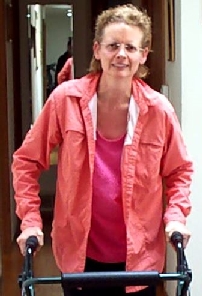 In January 2016 MD Monthly Magazine published an opinion piece, by one of the founding members of PFSC, SammyJo Wilkinson. She recounted the life-saving cellular therapy she had in 2012 from Houston-based biotechnology company, Celltex Therapeutics. Celltex took her adipose-derived stem cells and cultured them in their state-of-the-art, FDA-regulated laboratory, to reach a therapeutic dose in the hundreds of millions of mesenchymal stem cells, or MSCs. Her first round of therapy was administered in Houston. However, shortly after, the FDA made a ruling that expanded (cultured) adult stem cells constituted a biological drug. Celltex was forced to move therapy to Cancun, Mexico, where SammyJo continued therapy after a year delay.
While Celltex continues to operate a best-in-class cGMP laboratory in Houston, the company exports cells to Mexico, in accordance with the Federal Commission for Protection against Sanitary Risk (COFEPRIS), which is considered the regulatory equivalent of the FDA in Mexico. Cells are used by licensed physicians at Hospital Galenia for therapeutic applications.
Adult stem cell therapy spared SammyJo from 20 years of disabling multiple sclerosis, and impending nursing home care. By 2014 her disease was in remission. Today she is still living at home with her husband. She is pain-free, and four years into recovery. Recently, she reached a milestone with the ability to stand up from her wheelchair and walk 100 feet with a walker.
In her article she quoted one of her long time stem cell heroes, Dr. Andrew von Eschenbach, former FDA director, who is also speaking at the June 23rd BPC Panel discussion. He has gone on record stating:
“Breakthrough technologies deserve a breakthrough in the way the FDA evaluates them. Take regenerative medicine… after proof of concept and safety testing, a product could be approved for marketing with every eligible patient entered in a registry so the company and the FDA can establish efficacy through post-market studies.”
The FDA ruling in 2012 claiming that expanded cells are “more than minimally manipulated” was not supported by scientific evidence, and the FDA ignored the fact that the expanded cells that saved SammyJo’s life were identical to the original cells taken from her body.
PFSC is happy to see Real World Patient Evidence given credit, and is happy to add the many success stories we have documented. This is what motivates our grassroots advocacy effort to make this therapy available to all Americans. The current legislative effort needs to take our perspective on FDA over regulation into account. We herewith submit this article as patient testimony to the Congressional hearings on regenerative medicine therapy.
If you agree with the opinions in this article. please express this to your legislators by sending an email in your own words from the one click email for at CellTherapyNow.org
SammyJo Wilkinson
Member, Patients For Stem Cells
Member, Patients For Stem Cells
No comments:
Post a Comment
Note: Only a member of this blog may post a comment.